


Saving the Giants
The Question
California was deep into a historic drought. Trees were dying across the Sierra Nevada and fire risk was climbing. The state needed to know which forests were becoming tinder, where firebreaks should be cut, and whether the ancient giant sequoias — some of the oldest living things on Earth — were at risk.
What We Found
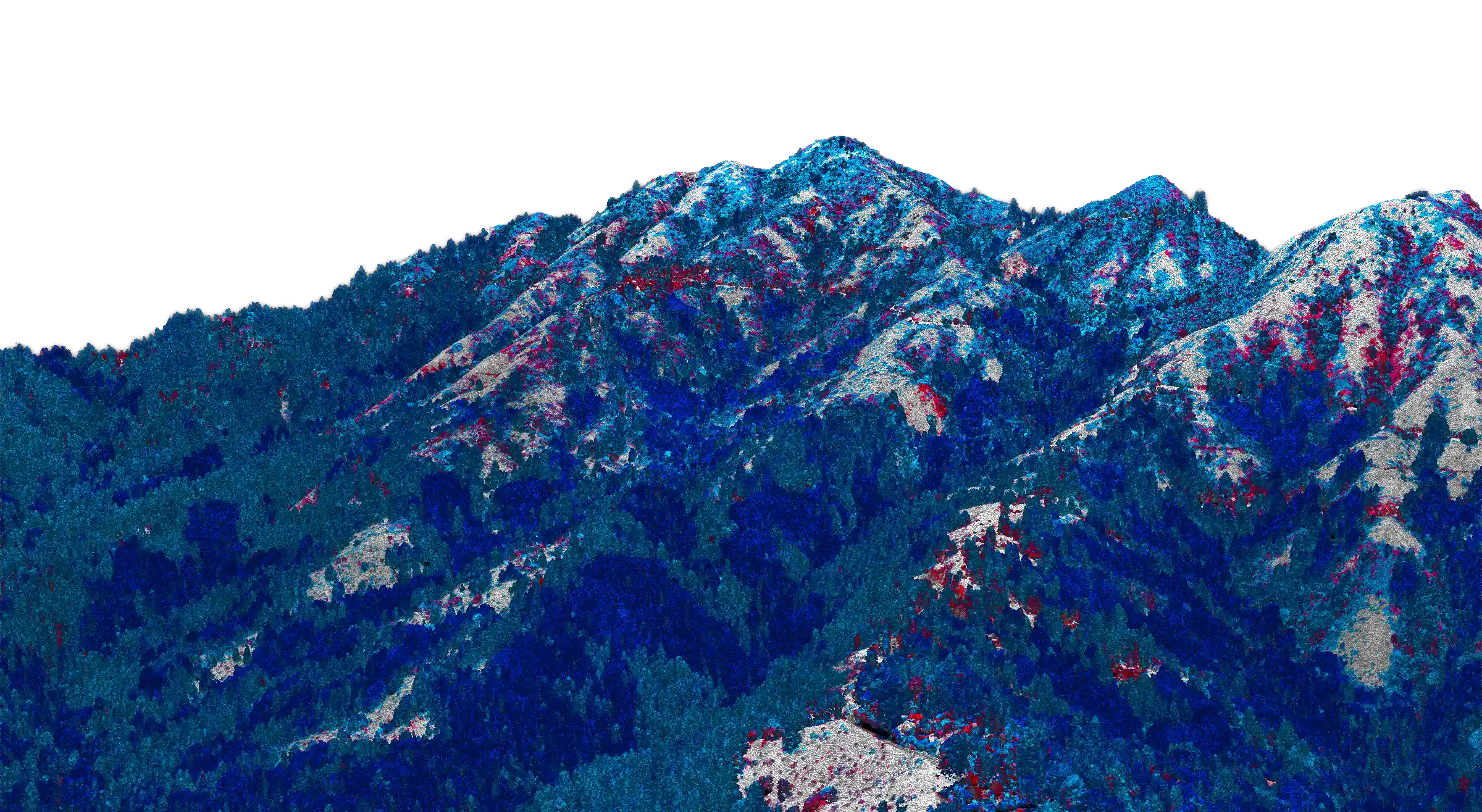
Flying the Sierras repeatedly as the drought progressed, the spectrometer revealed something invisible to the eye — trees becoming chemically stressed before they changed color. Weeks or months before a tree looked dead, its spectral signature showed it was dying. The maps showed patterns. Trees in gulches where soil moisture lasted longer were holding on. Trees on ridges and exposed slopes were failing. The giant sequoias scattered through the range in isolated groves were showing stress.
The Outcome
California used the data to prioritize firebreak construction where dead and dying trees created the highest risk. Forest managers conducted prescribed burns beneath sequoia groves, clearing understory brush that could carry fire into ancient canopies. At times we were flying alongside supertanker aircraft dropping water and retardant on active fires. Tens of thousands of giant sequoias survived because managers knew where to focus.